
COP 17 United Nations Climate Change Conference Durban, South Africa 28 November - 9 December
5th December 2011 - 5300 days ago
Lord Stern: rich nations should stop subsidising fossil fuel industry
If rich nations were to stop subsidising fossil fuels to the tune of billions of dollars a year, the money raised could go a substantial way to providing the cash needed to help poor countries develop a "green" economy and cope with the effects of climate change, one of the world's leading economists said.
Lord Nicholas Stern, former World Bank chief economist and author of the landmark report for the previous Labour government on the costs of climate change, told the Guardian that rich economies waste money and disadvantage renewable energy by giving away tax breaks, loans and other subsidies to the fossil fuel industry. If governments were to cut these out, and dedicate the savings to helping poor countries, that could raise about $10bn a year towards helping the poor on climate change.
Developed countries have already committed to help poor countries in this way, pledging $100bn a year by 2020, most of which would be channelled through a fund called the "green climate fund", which is the subject of intense debate at the two-week United Nations climate talks in Durban.
But Stern pointed out that the discussions at Durban have focused overwhelmingly on the technicalities of how a fund should be set up. There has been very little discussion on how the sums needed can be raised, although within eight years at least $100bn annually must be channelled to developing countries if existing commitments are to be fulfilled.

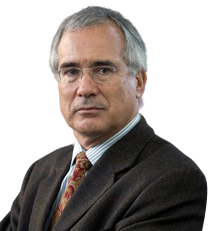
COP17 in Durban: Lord Nicholas Stern, UNFCCC executive secretary Christiana Figueres, COP president Maite Nkoana-Mashabane and John Hay, UNFCCC secretariat. Photograph: IISD
Rich nations need to focus urgently on how to raise the money needed, he said.
In addition to cutting out fossil fuel subsidies, Lord Stern said, developed countries could raise the remainder needed from carbon taxes, the auction of permits to emit carbon, levies on international transport and loans from international development banks would all be needed. The sums involved would be affordable if countries put the right policies in place, he said.
"It is all eminently doable. We have set out in detail our estimates and the policies that could achieve them – if governments show the political will," he said.
A tax on carbon of $25 a tonne in developed countries could raise as much as $50bn a year for the fund, while a tax on aviation and shipping emissions could raise $10bn even if countries retained half the revenues for themselves. Stern suggested this should be an attractive idea to cash-strapped government Treasuries. If loans from development banks are added, this could be enough to meet the $100bn a year target.
But the true benefits would be much larger – Stern calculated that these policies, and carbon trading, should be enough to stimulate an additional $200bn to $250bn from the private sector.
The estimates are contained in a report by Lord Stern and Mattia Romani of the Grantham Institute at the London School of Economics.
source: The Guardian
continue on page 2
CSA News
- Joschka Fischer delivered excellence itself. Our top corporate investors were totally won over.
- Klaus Schweinsberg's message was perfect for our management meeting in Germany, totally engaging.
- Our group meeting loved Sahar Hashemi, she was totally engaging, inspiring us all with her great story.
- Don Strickland had excellent content in his speech and gave us some great examples to follow.
- José María Figueres has an excellent presence and quality, he had great interaction with the audience.
- Daniel Sieberg was excellent. He tailored his speech perfectly to our youth audience - top quality.